7 Iconic German Christmas Traditions Worth Knowing


Christmas is one of the most impart German holidays. No wonder most tourists choose the winter holiday season to visit Germany. It is indeed a once-in-a-lifetime experience, thanks to the unique Christmas markets and traditions. Surprisingly, it is more than a one-day holiday. The celebration of German Christmas (Weihnachten) spans the entire month of December. Modern celebrations combine pre-Christian customs, such as the Yule log, and also Christian traditions like midnight masses and nativity scenes. Let's explore the key traditions that make German Christmas special, and pick up some essential vocabulary.
#1 Building Expectation throughout the Advent Season
The fourth Sunday before Christmas marks the start of the Christmas season for Germans. The Advent wreath (Adventskranz) is a way to count down to Christmas. Here's how it works. An evergreen wreath with four candles is placed on the dinner table in late November, four weeks leading up to Christmas. Every Sunday, families light one of the candles to count down to Christmas. Advent calendars (Adventskalender) are beloved worldwide, including in Germany, where they can be traced back to the fourth century. These cardboard or wooden calendars have 24 doors, one for each of the 24 days leading up to Christmas. Children open one door every day to get a small gift, which builds excitement for Christmas.
Baking Christmas cookies is also a beloved custom in Germany during the winter holidays. Families prepare vanilla-flavoured cookies called Vanillekipferl, made with ground almonds and powdered sugar. Gingerbread hearts (Lebkuchen) are also popular on Christmas in Germany.
#2 Barbara's Bloom
One of the most interesting Christmas traditions in Germany includes the one about Barbara branches. On December 4, people cut twigs from cherry, apple, and plum trees. They take the twigs home and place them in water, softly saying their positive thoughts for the upcoming year. The goal is to have them bloom by Christmas, considered a sign of good luck. Bare branches forecast hard times. Blooming twigs symbolize a prosperous year.
The custom has pagan origins, transformed through the Catholic lens on St. Barbara's day. St. Barbara was a Christian martyr from Asia, and her tale circulated throughout Europe by the Middle Ages. According to the story, Barbara was locked in a tower by her father. Waiting to be executed, she placed a dry cherry twig into her water, and the branch bloomed. Bavarian folklore adapted the story, prompting girls to cut cherry twigs that would bloom to predict their marriage and prosperity in the year to come.
#3 German Christmas Markets
German Christmas markets (Weihnachtsmärkte), also called Christ Child markets (Christkindlmärkte), are central to the celebration. Their look of open-air bazaars, decorated with sparkling lights, lighting up town squares, attracts locals and tourists from late November through December.
Originating in the Middle Ages as end-of-year markets for winter provisions, German Christmas markets evolved into glowing stalls selling German Christmas cookies, mulled wine (Glühwein), handmade ornaments (Weihnachtsbaumkugeln), and more. The most iconic markets in Germany include those in Nuremberg, Dresden, Munich, and Berlin.
Visitors can buy handmade ornaments, enjoy Ferris wheels, and listen to carolers performing traditional Christmas carols. The symbol of the Christ Child (Christkind), represented as a winged angel-like child, opens markets such as the one in Nuremberg from a balcony.
Nativity scenes (Krippen), including carved figures of Mary, Joseph, and baby Jesus, are common in traditional German Christmas celebrations. That includes both the famous Christmas markets and people's homes. More religious families in Bavaria are setting up small nativity scenes in their living rooms during Advent.
#4 The Protective Nutcracker
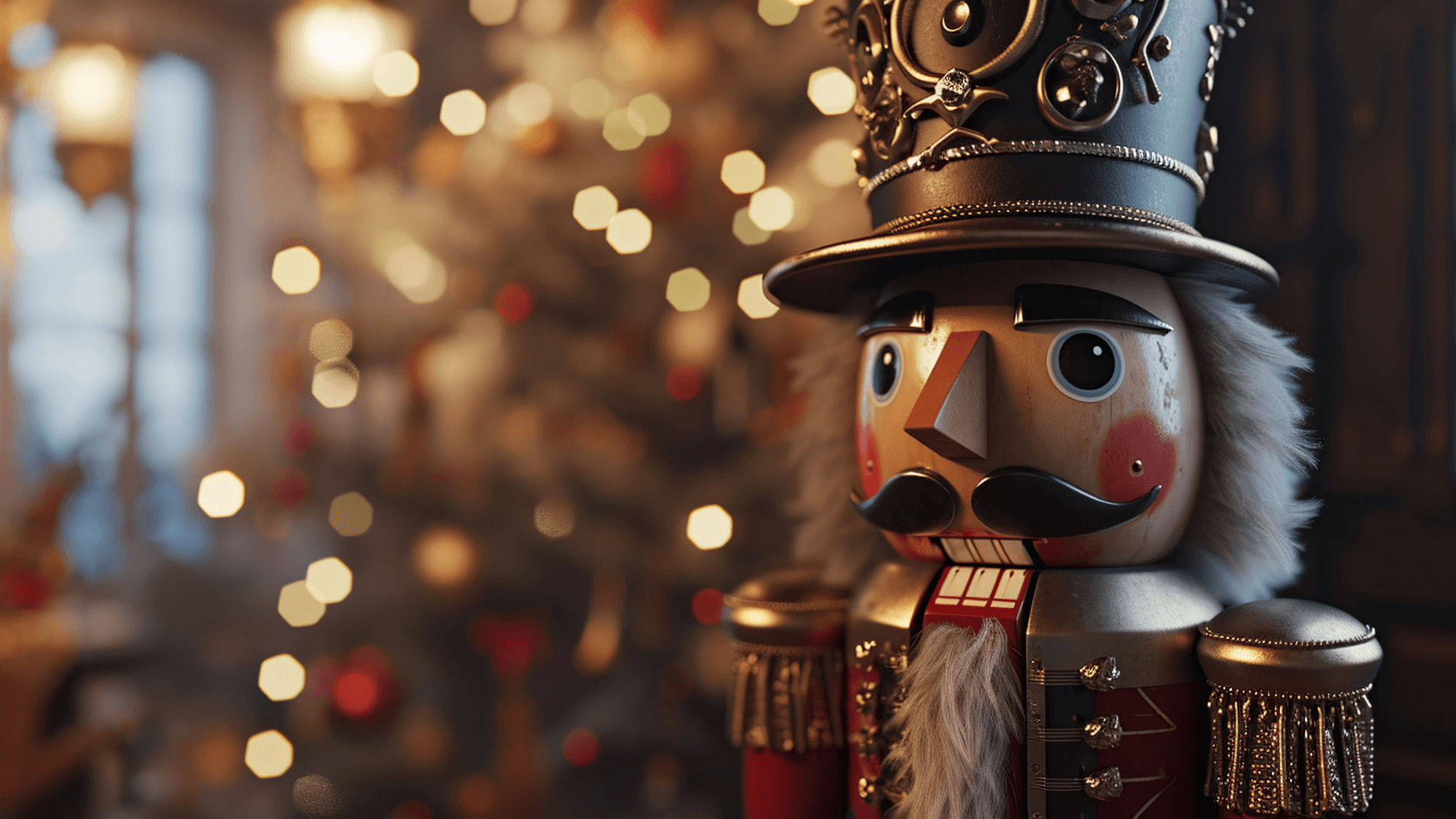
One of the most popular figures during the Christmas season in Germany is the Nutcracker (Nussknacker). An invention originating from the Erzgebirge region, it is a symbol of protection against evil spirits and bad luck. The Nutcracker originated in the late 17th century as a functional tool for cracking nuts, evolving into the talismans we know today. To clearly distinguish the kitchen tool from the artistic figurine, the latter features designs that stand out. It is one of these iconic wooden dolls that inspired Tchaikovsky's famous ballet.
Painted in red coats, fur hats, and mustaches, nutcrackers are believed to guard Advent tables and scare off evil spirits. Their key goal is to protect households, especially on Christmas. In the 19th century, the figures started to be mass-produced, blending utility, superstition, and art. In the region of Seiffen, they are still carved, and children are told to feed them nuts to keep a beautiful tradition alive.
#5 St. Nicholas Day

The festival season starts on St. Nicholas Day (Nikolaustag) on December 6th. Historically, St. Nicholas was a 4th-century bishop known for secretly giving gifts to children. It inspired the gift-giving tradition at the beginning of December. On the evening of December 5, children polish their boots or shoes. If the kids have been good throughout the year, St. Nicholas (der Heilige Nikolaus) fills their shoes with sweet treats and small gifts. Naughty children may find coal or a twig instead, which will remind them to behave. In southern Germany, particularly in the Alpine regions, St. Nicholas has an evil counterpart: Krampus, who is believed to "punish" children who misbehave. On December 5, men dress as Krampus, wearing horns and chains, and parading through town.
In Western and Southern Germany, St. Nicholas Day shows both reward and punishment. Local symbols include Ruprecht the Servant (Kneht Ruprecht), a bearded figure carrying coal and following Nikolaus. He recites how kids misbehaved, then chases them playfully. Another character, this time from Butzeberem, is represented by a hooded man, with rattling chains and birch twigs. His role is to scare children into behaving during Christmas time.
#6 Christmas Eve and the Main Celebration
To Germans, the most important day in December is Christmas, or the Holy Evening (Heiligabend), celebrated on December 24. The day was initially linked to Adam and Eve, and later moved to Christ's birth. On this day, shops in Germany usually close by noon, and everybody gets ready at home.
One custom is for parents to decorate the Tannenbaum (Christmas tree) secretly. Traditionally, they would use candles, ornaments (Kugeln), and a star. Once the Christmas tree is fully decorated, parents will unveil it to the children. A traditional Christmas Eve meal is also customary. Dishes such as potato salad (Kartoffelsalat) and sausages (Würstchen) or fondue are what most people have before the midnight church service.
One of the most anticipated parts of the day is the gift exchange (Bescherung). After dinner, the family gathers around the Christmas tree to open gifts from Christkind in southern and central Germany or Santa Claus in the north. Singing "Silent Night" (Stille Nacht) or "Oh, Christmas Tree" (O Tannenbaum) is part of the ritual. The day ends with the Midnight Mass (Christmette), attended by some. Church services commonly feature reenactments of the nativity scene, and attendees return home early on Christmas Day.
#7 The First and Second Christmas Day
December 25, First Christmas Day (Erster Weihnachtsfeiertag), and 26, Second Christmas Day (Zweiter Weihnachtsfeiertag) are both public holidays in Germany. Families gather for a special Christmas dinner. Some of the meals are roast goose or duck, turkey, pork, or fish. Red cabbage with braised apples, onions, wine, and spices is a classic side dish. Potato dumplings (Kartoffelknödel) are also beloved, along with bread dumplings (Serviettenknödel) or sauerkraut with sausages. After a hearty meal, the famous Christmas Stollen (Christstollen or Weihnachtsstollen) becomes the primary focus. It's a rich dough with butter, rum-soaked raisins, currants, dried fruits, chopped almonds, lemon or orange zest, and spices such as nutmeg, cloves, and cardamom. A log of marzipan often runs through the center, and a coating of powdered sugar covers the dessert.
December 26 is a day to relax after the events and Christmas meal. Families may visit their extended relatives or spend some time indoors, watching movies or playing board games. With all the shops closed, there is nowhere to go except for the church.
Christmas is celebrated in Germany more than New Year's. The celebration lasts several days, with church services, famous markets, and elaborate meals. For those reasons, Christmas is considered the biggest holiday of the year in Germany. New Year's is celebrated with toasts, more publicly and more prominently in the capital city, Berlin.
Learn German with FunEasyLearn
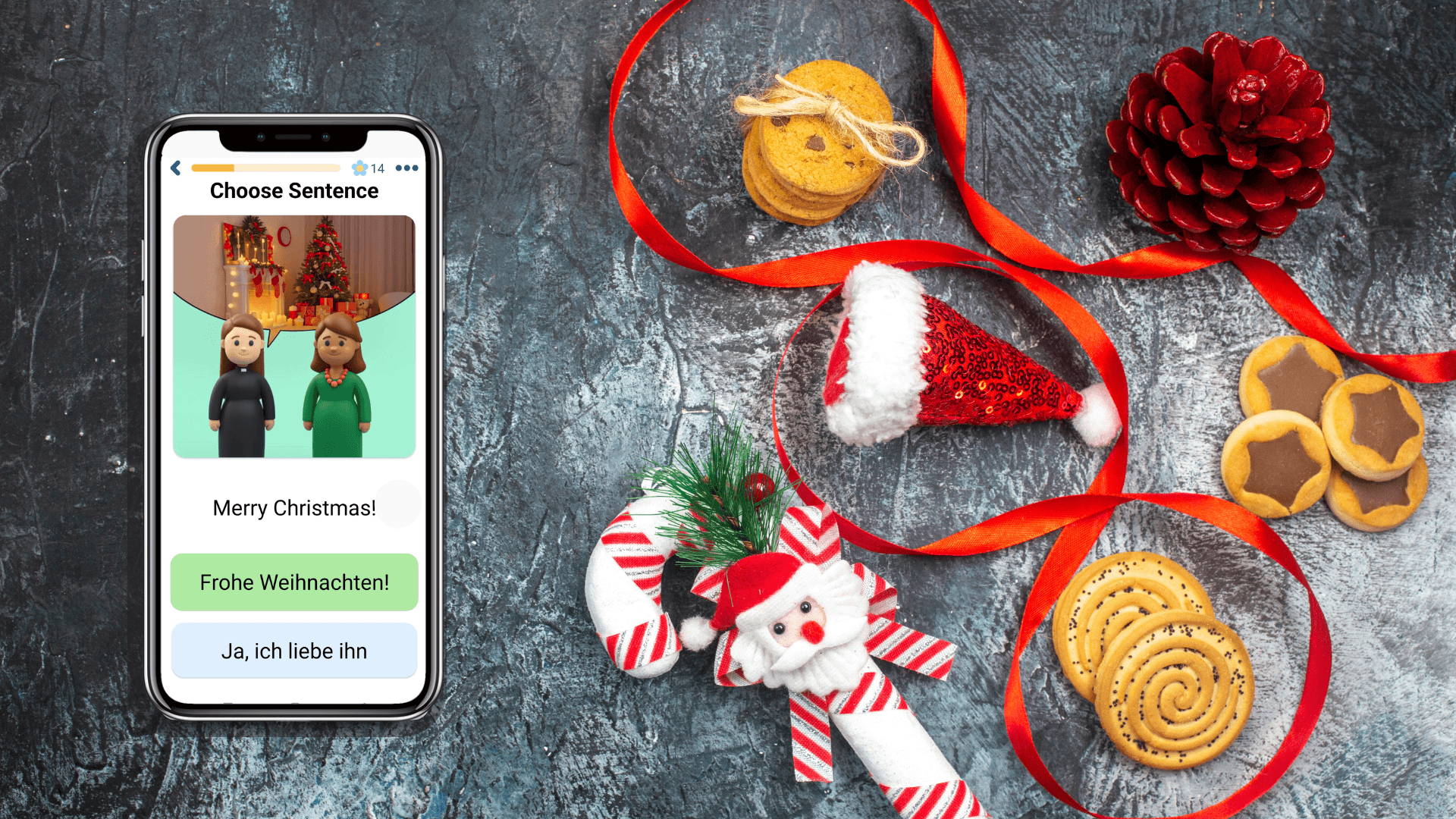
Immersing yourself in German Christmas traditions is an excellent way to learn winter vocabulary and better understand the language. If you'd like to interact with native speakers, FunEasyLearn can make your journey fun. The app features engaging vocabulary games that help you learn words and sentences almost effortlessly. What can you do with Premium?
🔓 Access all words and sentences.
Premium unlocks all the content, which, in most languages, means around 11,000 words and sentences, and over 350 topics and subtopics, enabling you to build a strong vocabulary.
🎧 Learn hands-free
Learn anytime, anywhere, with your headphones on and your phone in your pocket. In a hectic world, every minute counts. Save up time by learning or reviewing vocabulary on the go. Listen to a list of words when you're walking the dog, running errands, working out, or during your daily commute.
🔍 Search for the right word.
Another powerful feature is the search bar. Use it to look up the words you need. The functionality is ideal when you have a word on the tip of your tongue or need to quickly prepare for a conversation.
🔁 Learn smart, not hard.
Did you know you can boost your language-learning efficiency with the Review feature? The algorithm calculates exactly when you need to review your vocabulary, actually to memorize the new words and sentences. That way, you remember more with less effort.
What if you could make language-learning more fun and efficient?